

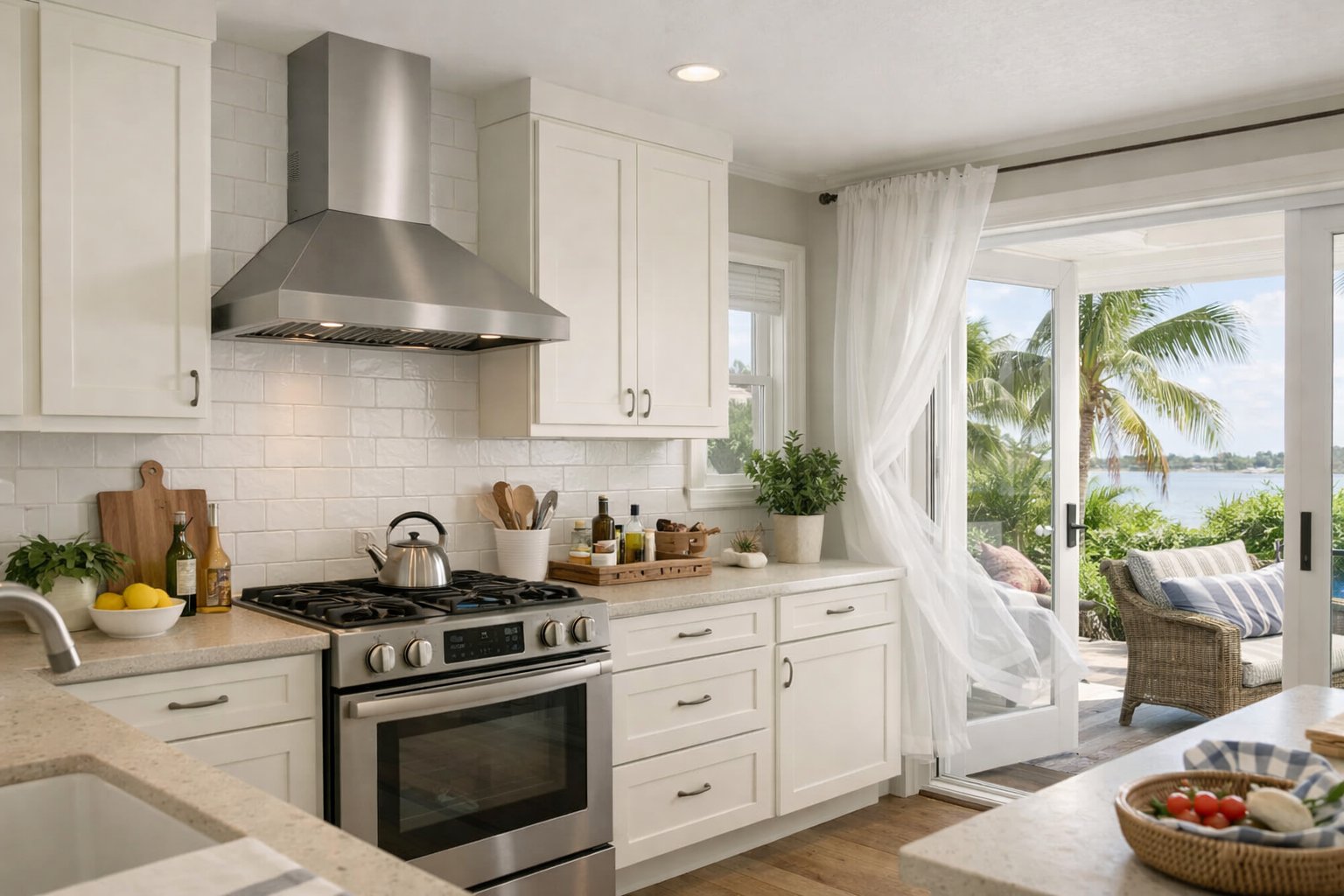
Florida kitchens deal with a very different set of comfort challenges than homes in cooler or drier regions. High outdoor humidity, long cooling seasons, and frequent cooking all combine to trap heat and moisture indoors. Over time, poor ventilation can lead to sticky air, lingering odors, overworked air conditioning systems, and even damage to cabinets, flooring, and finishes.
Florida-friendly kitchen ventilation upgrades focus on controlling heat and humidity at the source, rather than relying solely on air conditioning to compensate. When the right systems are paired with smart layout choices and moisture-resistant materials, kitchens stay noticeably cooler, drier, and more comfortable year-round.
Why kitchen ventilation matters more in Florida homes
In Florida’s climate, excess moisture does not simply feel uncomfortable—it actively works against the home. Steam from boiling water, heat from cooktops, and warm air trapped near ceilings all add to indoor humidity levels. Without proper ventilation, that moisture spreads throughout adjacent living areas.
Over time, this can contribute to warped cabinetry, peeling finishes, swollen wood materials, and musty odors. Effective ventilation helps remove moisture before it has a chance to migrate, protecting both comfort and long-term durability.
Vent hood performance that actually removes moisture
Not all vent hoods are created equal, especially for Florida kitchens. Basic recirculating hoods may capture grease, but they do very little to remove heat or humidity.
High-performance vent hoods that duct air outside are far more effective. Look for systems with adequate airflow capacity for the size of the kitchen and cooking habits. In humid climates, consistent removal of moist air is far more important than raw power alone. A properly sized, externally vented hood pulls steam directly outdoors, preventing it from lingering near ceilings and cabinets.
Placement strategies that improve airflow efficiency
Ventilation effectiveness is not just about equipment—it is also about placement. Hoods that sit too high above the cooktop allow heat and steam to spread before capture. Units positioned too low can interfere with cooking ergonomics.
In Florida kitchens, correct alignment over primary cooking zones ensures steam is captured early, before humidity disperses. Open-concept layouts benefit especially from precise placement, as moisture otherwise travels quickly into living and dining spaces.
Ceiling height considerations in Florida kitchens
Higher ceilings are common in Florida homes, but they introduce a ventilation challenge. Warm, humid air naturally rises and can pool overhead. Without adequate airflow, this trapped heat slowly radiates back down into the kitchen.
Ventilation systems designed for taller ceilings often include higher-capacity blowers or extended hood designs to account for vertical air movement. When paired with moisture-resistant finishes and flooring materials—such as those commonly used in modern kitchen remodeling—these upgrades help maintain stable indoor conditions even during peak summer months. For homeowners already planning surface upgrades, moisture-aware material choices in areas like tile flooring can further support ventilation performance by resisting humidity-related expansion and staining.
Make-up air systems that balance comfort
In tightly sealed homes, powerful exhaust systems can pull conditioned air out faster than it can be replaced. This imbalance may cause warm, humid outdoor air to be drawn inside through gaps and openings.
Make-up air systems solve this problem by replacing exhausted air in a controlled manner. In Florida, this balance is especially important. Properly managed air replacement prevents unwanted humidity infiltration while allowing vent hoods to operate at full efficiency without straining the HVAC system.
Smart controls that adapt to Florida humidity
Modern ventilation systems often include humidity sensors or variable-speed controls. Instead of running constantly, these systems adjust airflow based on real-time conditions.
During heavy cooking, airflow increases to capture steam quickly. During light use, speeds reduce to maintain comfort without unnecessary energy use. This responsive approach works particularly well in Florida, where humidity levels fluctuate throughout the day.
Coordinating ventilation with kitchen layout updates
Ventilation upgrades are most effective when planned alongside broader kitchen improvements. Cabinet design, appliance placement, and ceiling features all influence airflow paths.
For homeowners considering full kitchen remodeling projects, ventilation should be addressed early in the design phase. Integrated planning allows duct routing, hood placement, and material selection to work together instead of competing for space. Flooring surfaces that tolerate moisture fluctuations—such as properly installed tile or luxury vinyl—also support healthier indoor conditions by resisting humidity-related wear.
Long-term benefits beyond comfort
Improved kitchen ventilation does more than reduce heat and humidity. It helps preserve finishes, supports better indoor air quality, and reduces strain on cooling systems. Over time, this can extend the lifespan of appliances, cabinetry, and flooring while lowering energy usage during Florida’s longest cooling months.
Get expert guidance for a cooler, drier kitchen
For homeowners throughout Lake County and surrounding areas, we provide kitchen remodeling solutions designed specifically for Florida’s heat and humidity. Our in-house team focuses on smart layouts, moisture-aware material choices, and ventilation-friendly designs that support long-term comfort and performance. To talk through kitchen upgrade options or start planning a project, connect with our team through the contact page.


