
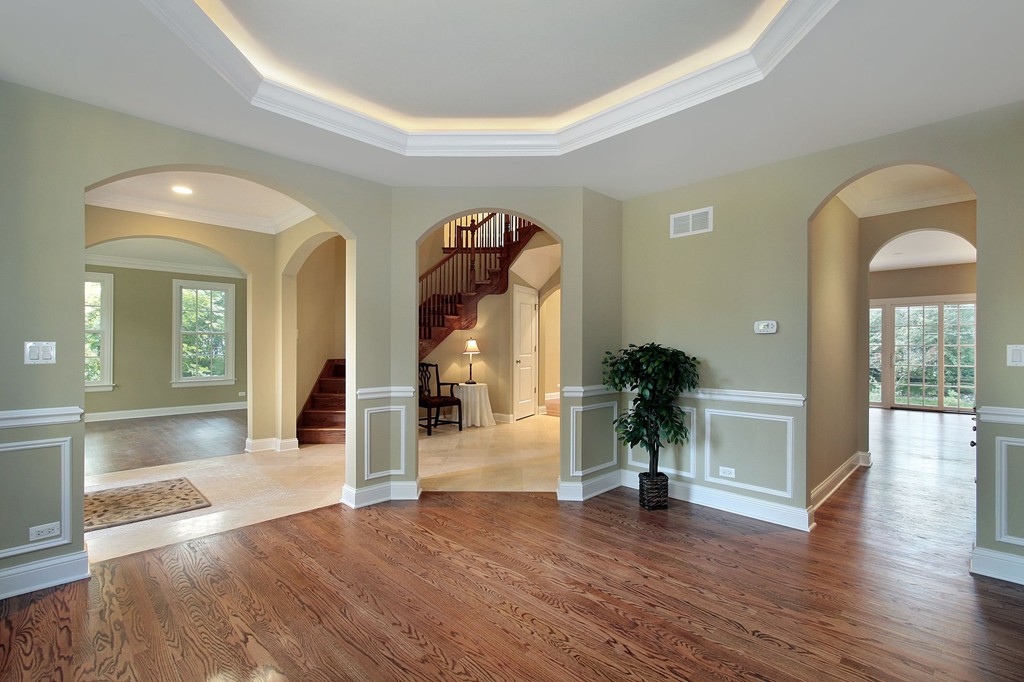
Choosing new wood flooring can feel like navigating a minefield of conflicting product advice. For homeowners in Lake County, FL, the decision largely boils down to a single question: should you install solid hardwood or engineered hardwood flooring? Both variants introduce an element of organic warmth and luxury to your property, yet they behave entirely differently beneath the surface.
Because wood is naturally responsive to environmental changes, matching the structural build of your planks to your local environment is critical. Central Florida's climate presents distinct structural challenges—chiefly heat, interior humidity, and concrete foundations. To ensure your long-term satisfaction and avoid premature buckling, it helps to understand the underlying construction of these two industry standards.
Solid Hardwood: The Single-Plank Classic
Solid hardwood flooring consists of boards cut from a single, continuous piece of timber. Historically, natural oak flooring and other premium domestic woods have been prized because they can be sanded down and refinished multiple times over several generations. This type of flooring adds undeniable long-term character and value to properties.
However, solid wood planks are susceptible to expanding and contracting along their grain line when moisture levels fluctuate. In a humid subtropical region, a solid plank can absorb ambient vapor, expanding in width and potentially causing structural "cupping" if the subfloor isn't carefully prepped and isolated from underlying moisture. Furthermore, solid wood planks generally must be nailed down to a wooden subfloor rather than attached directly to concrete slabs.
Engineered Hardwood: Layered for Stability
Engineered hardwood flooring relies on a smart, multi-layered build. The outermost top layer, or veneer, is a genuine slice of real hardwood, providing the exact grain pattern and texture of traditional solid planks. Beneath this aesthetic layer lie multiple cross-directional layers of high-density fiberboard (HDF) or structural plywood.
This cross-ply configuration counteracts the wood’s innate tendency to twist or expand when temperatures and humidity climb. For properties across Florida, this added stability provides significant long-term performance advantages:
Subfloor Adaptability: Engineered planks can be safely installed over concrete slabs, which are standard in local home builds.
Glue-Down Compatibility: They can be secured via glue-down floor applications, creating a highly dimensional, secure base in heavily trafficked zones.
Eco-Friendly Sourcing: Because only the top veneer uses premium wood species, it maximizes timber yields from well-managed forests, offering an eco-friendly option for sustainable remodeling.
Making an Informed Upgrade
Navigating product grades doesn't have to be confusing. At Direct Custom Flooring, we make it our mission to cut through internet misinformation, helping you pick a material that guarantees years of pride rather than future regret. Our in-house crews never use subcontractors, ensuring that every plank is laid by an expert with a direct stake in your home's transformation. You can learn more about our company values and our rigorous internal standards by visiting our About Us page.
Ready to experience premium wood finishes in your own living space? Stop by our physical showroom or review our localized service regions on our dedicated Locations page to schedule your professional in-home consultation!


